

Cargadores de Drones en Venta: Aumenta tu Tiempo de Vuelo en 2026
Las operaciones exitosas de drones no se alimentan de baterías; se alimentan de un flujo de trabajo de carga inteligente. Si está cansado de esperar horas para que una sola batería se cargue mientras la iluminación perfecta desaparece, es hora de actualizar su estación terrestre. Encontrar los cargadores de drones adecuados a la venta no se trata solo de velocidad, sino de proteger su inversión de la degradación de las celdas y del miedo a los incendios de LiPo. Muchos pilotos pierden la mitad del día en tierra porque están atascados con equipos obsoletos o incompatibles.
Conocemos la frustración de adivinar si un concentrador de terceros es seguro o si su configuración cumple con las últimas regulaciones de la FAA de 2026. Esta guía de compra dirigida por expertos lo ayudará a encontrar el cargador perfecto para minimizar el tiempo de inactividad y maximizar su rendimiento aéreo. Previsualizaremos la mejor tecnología de carga rápida, explicaremos la regla crítica 80/20 para la longevidad de la batería y lo ayudaremos a identificar hardware compatible con NDAA para uso profesional. Deje de esperar y comience a volar con una estrategia de energía que lo mantenga en el cielo.
Puntos Clave
- Actualice de los cargadores básicos de serie a administradores de energía inteligentes que rastrean el estado de las celdas y los datos de rendimiento para cada vuelo.
- Explore los mejores cargadores de drones a la venta para identificar qué arquitecturas paralelas o secuenciales se ajustan a sus necesidades empresariales o de consumo.
- Aprenda a equilibrar las velocidades de carga rápida con la longevidad de la batería a largo plazo al comprender el impacto de los ciclos de alto amperaje.
- Establezca una rutina de inspección previa a la carga para salvaguardar su equipo contra el estrés ambiental y posibles fallas de la batería.
- Acceda a asesoramiento técnico profesional y piezas de alto rendimiento para garantizar que su flujo de trabajo de carga cumpla con los estrictos estándares de seguridad de 2026.
Cargadores de Drones Esenciales a la Venta: Por Qué Su Configuración Necesita una Actualización
Piense en su cargador de drones como el cerebro de sus operaciones de vuelo. En 2026, una unidad de alta calidad ya no es solo un bloque de alimentación; es un administrador de energía basado en datos. Las baterías modernas basadas en litio, que representaron más del 85.94% de la cuota de mercado en 2025, requieren una regulación de voltaje precisa para mantenerse sanas y seguras. Si todavía está utilizando el cable básico que venía en la caja, se está perdiendo el equilibrio crítico de las celdas y los diagnósticos de salud. Encontrar los cargadores de drones a la venta adecuados garantiza que sus baterías no solo se carguen, sino que prosperen en cada ciclo.
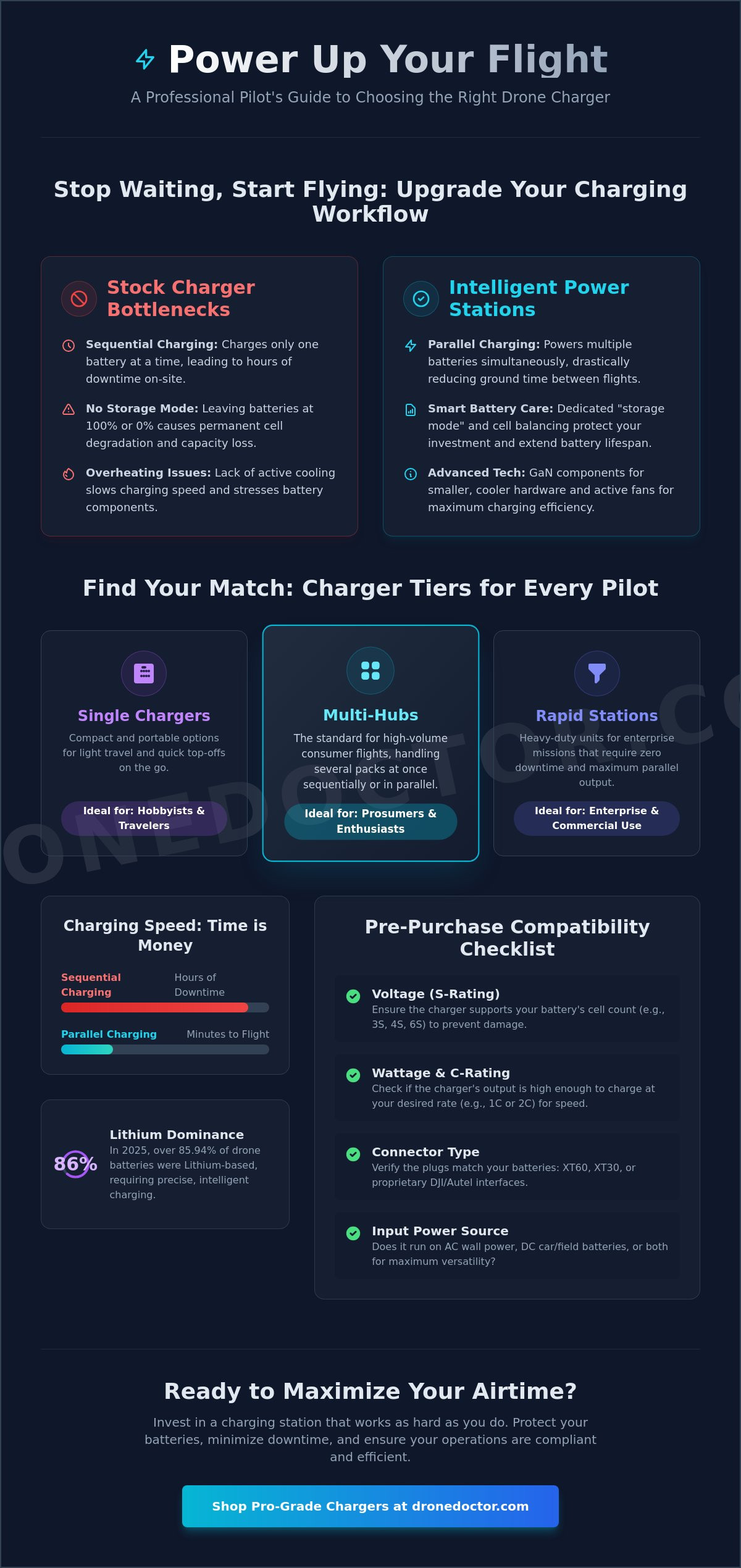
Los cargadores de serie suelen ser el producto "mínimamente viable" diseñado para que pueda volar una vez. Los pilotos profesionales, sin embargo, clasifican su equipo en tres niveles distintos para que coincidan con sus perfiles de misión:
- Cargadores Individuales: Opciones compactas y portátiles para viajes ligeros y cargas rápidas.
- Concentradores Múltiples: El estándar para vuelos de consumo de gran volumen, manejando varios paquetes a la vez.
- Estaciones Rápidas: Unidades de servicio pesado para misiones empresariales que requieren cero tiempo de inactividad y máxima producción.
La Evolución de la Tecnología de Carga de Drones en 2026
La industria ha avanzado rápidamente hacia estándares universales y una mayor eficiencia. La entrega de energía USB-C (PD) es ahora la base para la mayoría de los drones de consumo, lo que permite una mejor compatibilidad entre sus dispositivos. También hemos visto un aumento masivo en los componentes de nitruro de galio (GaN). Este avance en la tecnología de cargadores de baterías permite que el hardware de grado profesional sea más pequeño y funcione mucho más frío que los antiguos modelos basados en silicio. Incluso su cargador ahora recibe actualizaciones de firmware para optimizar los algoritmos de carga para las últimas químicas de baterías, asegurando que sus cargadores de drones a la venta permanezcan a prueba de futuro durante los próximos años.
Por Qué los Cargadores de Serie Suelen Quedarse Cortos para los Pilotos Profesionales
El mayor cuello de botella para cualquier piloto es la "carga secuencial". La mayoría de los concentradores estándar cargan una batería a la vez, dejando los otros paquetes inactivos durante horas. Las unidades profesionales ofrecen carga paralela, inyectando energía en múltiples paquetes simultáneamente para que vuelva al aire más rápido. También incluyen un "modo de almacenamiento" dedicado. Esto es vital porque dejar las baterías completamente cargadas o completamente vacías provoca una pérdida de capacidad permanente. Sin ventiladores de refrigeración activos, los cargadores básicos también pueden sobrecalentarse, ralentizando la transferencia de energía justo cuando más la necesita. Obtenga un cargador que funcione tan duro como lo hace su dron.
Encontrando la Combinación Perfecta: Tipos de Cargadores de Drones para Cada Piloto
No deje que un cargador incompatible deje su flota en tierra. Su configuración de energía debe ajustarse a los requisitos específicos de su aeronave. Al revisar varios cargadores de drones a la venta, recuerde que la compatibilidad no se trata solo del enchufe; se trata de la comunicación entre la batería y la estación. Los sistemas propietarios como las baterías de vuelo inteligentes de DJI utilizan un Sistema de Gestión de Baterías (BMS) interno que se comunica directamente con el concentrador para evitar la sobrecarga. Por el contrario, las baterías LiPo estándar utilizadas en los drones FPV requieren que configure manualmente los parámetros. Adapte su equipo a su misión para garantizar un rendimiento óptimo.
Antes de pulsar el botón de pago, revise esta lista de verificación rápida de compatibilidad:
- Voltaje (Clasificación S): ¿El cargador es compatible con el número de celdas de su batería, como 3S, 4S o 6S?
- Potencia: ¿La salida es lo suficientemente alta para cargar a una tasa de 1C o 2C?
- Tipo de Conector: ¿Necesita XT60, XT30 o una interfaz propietaria de DJI/Autel?
- Entrada de Energía: ¿Funciona con tomas de corriente alterna (AC), baterías de coche de corriente continua (DC) o ambas?
Concentradores de Consumo: El Ecosistema 'Fly More' de DJI
La mayoría de los aficionados comienzan con el combo DJI Fly More. Estos concentradores están diseñados para la máxima comodidad, a menudo con un modo "Power Bank" que le permite usar las baterías de su dron para cargar su teléfono o control remoto en caso de emergencia. Estos sistemas priorizan la batería con la mayor carga restante, lo que le permite volver al aire lo más rápido posible. Si aún está decidiendo una plataforma, consulte nuestra guía sobre Drones a la venta para ver cómo los diferentes paquetes afectan sus necesidades de carga.
Estaciones de Carga Empresariales: Construidas para Trabajos Pesados
Los pilotos comerciales que vuelan la serie Matrice 350 o Autel EVO Max necesitan estaciones robustas tipo maleta. Estas unidades están construidas para el campo y a menudo cuentan con sellos resistentes a la intemperie. Ofrecen un modo "Listo para la Misión", que carga las baterías al 90% en un tiempo récord. Esta es una elección estratégica; ese último 10% es el que más tarda y el que más calor añade. Al detenerse en el 90%, maximiza sus ciclos de vuelo diarios sin sobrecargar su hardware. Siga siempre las directrices de la FAA sobre seguridad de baterías de litio al transportar estos paquetes de alta capacidad a lugares de trabajo remotos.
FPV y DIY: El Mundo de los Cargadores de Equilibrio
El mundo FPV se basa en los estándares de conectores XT60 y XT30. A diferencia de los drones inteligentes, estas baterías no tienen cerebros incorporados. Debe usar un cargador de equilibrio para monitorear el voltaje de cada celda individual. Los cargadores FPV de alta gama a menudo admiten entrada de CC, lo que le permite encender directamente desde la batería de un automóvil o una batería marina de ciclo profundo grande mientras está en la pista. Si no está seguro acerca de un conector específico o necesita un cable de reemplazo, nuestro equipo en Drone Doctor LLC puede ayudarlo a verificar la compatibilidad y obtener las piezas correctas rápidamente.
Velocidad vs. Longevidad: Comparando Cargadores Rápidos con Concentradores Estándar
"¿La carga rápida mata mi batería?" Esta es la pregunta más común que escuchamos de los pilotos que buscan equipos de alto rendimiento. La respuesta corta es: no si su cargador es lo suficientemente inteligente como para manejar el calor. Cuando compara cargadores de drones a la venta, la elección generalmente se reduce a concentradores secuenciales versus estaciones rápidas paralelas. Los concentradores secuenciales, como los que se encuentran en los paquetes de consumo estándar, cargan una batería a la vez. Aunque son seguros, son agonizantemente lentos para los flujos de trabajo profesionales. Sin embargo, los sistemas paralelos distribuyen la energía en todos los puertos a la vez, pero requieren una refrigeración sofisticada para evitar daños en las celdas.
La resistencia interna es el enemigo invisible aquí. A medida que las baterías envejecen, su resistencia aumenta, generando más calor durante un ciclo de carga. Los cargadores de grado profesional monitorean esta resistencia en tiempo real, reduciendo la corriente si una batería comienza a sobrecalentarse. Seguir las directrices de la FAA sobre seguridad de baterías de litio es fundamental, ya que el calor excesivo es el principal desencadenante de la fuga térmica. Si su cargador no puede leer el estado interno de las celdas, esencialmente está volando con tiempo prestado. Los cargadores de drones a la venta de alta calidad le brindan la transparencia que necesita para retirar los paquetes viejos antes de que se conviertan en un problema.
La Ciencia de la Carga Rápida (PRCS)
Los sistemas de carga rápida (PRCS) están diseñados con ventiladores de alta velocidad y disipadores de calor dedicados que los concentradores de plástico estándar simplemente no tienen. Este hardware les permite impulsar un amperaje más alto de forma segura mientras se mantienen dentro de la "clasificación C" de la batería, que es la tasa máxima a la que se puede cargar una celda sin degradación química. La carga paralela es la entrega simultánea de potencia máxima a múltiples puertos, asegurando que cada paquete de su bolsa esté listo exactamente al mismo tiempo. Esta diferencia arquitectónica es la razón por la cual los equipos profesionales pueden volar indefinidamente con solo dos o tres juegos de baterías, mientras que los aficionados a menudo se quedan esperando un concentrador de un solo canal.
Protegiendo Su Inversión: Por Qué el Modo Almacenamiento Importa
La forma más rápida de agotar una batería LiPo no es la carga rápida; es un almacenamiento inadecuado. Dejar una batería al 100% o al 0% durante más de unos pocos días provoca estrés químico interno, lo que lleva a "hinchazón" o pérdida permanente de capacidad. Nuestros servicios de reparación de drones a menudo ven baterías que se han hinchado tanto que han roto sus carcasas de plástico. Un cargador profesional incluye un modo de almacenamiento dedicado que descarga o carga automáticamente sus paquetes a un nivel estable del 50%. Esta sencilla característica puede duplicar la vida útil de sus paquetes de vuelo, ahorrándole cientos de dólares en costos de reemplazo en un solo año. Deje de tratar sus baterías como desechables y comience a administrarlas como los activos de alta tecnología que son.
Cuidado de Baterías a Nivel Profesional: Cómo Cargar de Forma Segura y Extender la Vida Útil
La seguridad no es una sugerencia; es un requisito para todo piloto profesional. Antes de enchufar, realice una inspección "Pre-Carga". Busque cualquier signo de hinchazón, perforaciones u olores extraños. Si una batería se siente blanda o "esponjosa", ya está comprometida. Al buscar cargadores de drones a la venta, busque unidades con sensores de seguridad incorporados que puedan detectar cortocircuitos internos antes de que se conviertan en un riesgo de incendio. Su cargador debe ser su primera línea de defensa contra fallas del equipo.
Los factores ambientales juegan un papel enorme en la longevidad de la batería. No cargue sus paquetes bajo la luz solar directa o dentro de un automóvil caliente. Por el contrario, cargar a temperaturas bajo cero puede causar un revestimiento de litio permanente. Procure un ambiente a temperatura ambiente entre 15°C y 27°C. Siga estas estrictas reglas de "Nunca" para mantener su espacio de trabajo seguro:
- Nunca cargue baterías en superficies inflamables como alfombras o madera.
- Nunca deje una estación de carga desatendida por largos períodos.
- Nunca cargue una batería que aún esté caliente de un vuelo reciente.
- Nunca use un cargador con un cable de alimentación deshilachado o dañado.
Protocolos de Seguridad para Baterías LiPo y LiHV
Utilice siempre bolsas LiPo ignífugas o cajas metálicas de municiones durante el proceso de carga. Estos contenedores están diseñados para contener llamas y ventilar gases de forma segura si una celda falla. Las baterías de alto voltaje (LiHV) requieren tolerancias de voltaje aún más estrictas, así que asegúrese de que su concentrador esté específicamente clasificado para ellas. El daño físico a una batería es una orden de "detener el uso". No arriesgue su dron o su casa con un paquete abollado. Si ha tenido un aterrizaje forzoso, consulte nuestros servicios de reparación de drones para que su hardware sea inspeccionado profesionalmente en busca de daños ocultos.
Gestión de Ciclos de Batería para Flotas Comerciales
Para los usuarios empresariales, los datos son fundamentales. Utilice la interfaz de su cargador para rastrear los recuentos de ciclos y la resistencia interna de cada paquete de su flota. La mayoría de las operaciones profesionales retiran las baterías una vez que alcanzan un umbral de ciclo específico o muestran una caída significativa en la capacidad. Los concentradores inteligentes que se sincronizan con aplicaciones móviles hacen que este registro sea automático, eliminando las conjeturas del mantenimiento de la flota. Invertir en cargadores de drones a la venta premium le brinda las herramientas analíticas para predecir fallas antes de que ocurran, manteniendo sus operaciones comerciales rentables y seguras.
Comprar Cargadores de Drones en Drone Doctor: Soporte Experto y Envío Rápido
Elegir el equipo adecuado es solo la mitad de la batalla. Necesita un socio que entienda los matices técnicos de su flota. En Drone Doctor, cerramos la brecha entre el hardware de alto rendimiento y el soporte técnico del mundo real. Cuando busque cargadores de drones a la venta, encontrará una selección curada que ha superado nuestro riguroso proceso de aprobación "Probado por técnicos". No solo movemos cajas; nos aseguramos de que cada pieza que enviamos esté lista para las demandas de las operaciones de vuelo de 2026. Nuestro estatus como LLC con sede en EE. UU. significa que obtiene soporte de garantía confiable y responsabilidad con cada compra.
Tenemos en stock de todo, desde concentradores OEM originales de DJI hasta alternativas de alto rendimiento diseñadas para las demandas a nivel empresarial. Cada cargador en nuestro inventario se evalúa en función de su capacidad para gestionar el calor, equilibrar las celdas y proporcionar datos precisos. No está comprando solo un cable de alimentación; está invirtiendo en un sistema que protege sus cargadores de drones a la venta y las costosas baterías que alimentan. No se conforme con lo "suficientemente bueno" cuando puede tener equipos que han sido verificados por el mejor equipo de reparación del sector.
¿Por Qué Comprar a una Empresa Centrada en la Reparación?
Nuestro banco de reparaciones es nuestra mayor fuente de información. Vemos las consecuencias de las "malas subidas de tensión" y los concentradores de baja calidad que arruinan costosos paquetes de vuelo. Esta mentalidad de "reparar primero" significa que solo almacenamos componentes en los que confiamos para nuestras propias misiones. Hemos reparado innumerables drones que sufrieron circuitos internos quemados debido a hardware de carga defectuoso. Esta experiencia nos permite asesorarle sobre soluciones de carga empresariales personalizadas que se adapten a su flujo de trabajo específico. Sabemos lo que funciona porque somos los que arreglamos lo que se rompe.
La Ventaja de Drone Doctor en 2026
Experimente la tranquilidad que le ofrece un hardware respaldado por expertos. Ofrecemos envíos rápidos a todo EE. UU. para reemplazos de misión críticos, asegurándonos de que nunca pierda una ventana de vuelo debido a un concentrador inoperativo. Nuestro soporte técnico no es un guion genérico. Es una línea directa con pilotos reales y técnicos de reparación que entienden los requisitos de energía de su aeronave. Estamos aquí para ayudarle a solucionar problemas, optimizar y actualizar su estación terrestre con confianza. ¡Explore nuestra selección completa de cargadores de drones a la venta!
Maximice el Potencial de Su Misión con una Alimentación Más Inteligente
Dominar su estrategia de energía es la forma más rápida de escalar sus operaciones aéreas en 2026. Ha aprendido cómo un flujo de trabajo de carga basado en datos previene la hinchazón de la batería y por qué priorizar la carga paralela sobre los concentradores secuenciales lo mantiene en el aire. Al adoptar rutinas de cuidado de nivel profesional y utilizar modos de almacenamiento dedicados, no solo está volando; está protegiendo su inversión. No deje que un ladrillo de energía genérico sea el eslabón débil en su configuración profesional.
Encontrar cargadores de drones de alto rendimiento en venta no debería ser un juego de adivinanzas. Como distribuidor autorizado de DJI y Enterprise, Drone Doctor LLC ofrece equipos probados en el mundo real por técnicos de reparación. Obtienes la tranquilidad que brinda el soporte técnico con base en EE. UU. y el hardware verificado para máxima seguridad. Toma el control de tu tiempo de inactividad y actualiza tu estación terrestre hoy mismo.
¡Compra cargadores de drones verificados por expertos ahora!
¡Equípate con confianza y volvamos al cielo!
Preguntas Frecuentes
¿Puedo usar un cargador de terceros con mi dron DJI?
Puedes usar cargadores de terceros siempre y cuando coincidan con el voltaje exacto y los protocolos de comunicación de las baterías de vuelo inteligentes de DJI. Las opciones de terceros de alta calidad a menudo ofrecen mejor refrigeración y velocidades más rápidas que las unidades de fábrica. Sin embargo, evita las alternativas baratas "sin marca" que carecen de una regulación de voltaje adecuada. Siempre verifica que el hardware esté específicamente clasificado para tu modelo de dron para evitar dañar el Sistema de Gestión de Baterías interno.
¿Cuál es la diferencia entre la carga secuencial y paralela de drones?
La carga secuencial carga una batería a la vez, pasando a la siguiente solo cuando la primera está llena. Esto es estándar para la mayoría de los concentradores de consumo, pero crea un cuello de botella masivo para los pilotos ocupados. La carga paralela entrega potencia completa a varias baterías simultáneamente. Esta configuración es esencial para equipos profesionales que necesitan un tiempo de respuesta rápido entre misiones. Las estaciones paralelas requieren una refrigeración más robusta para manejar la carga de calor aumentada de forma segura.
¿Cómo sé si la batería de mi dron está "hinchada" o no es segura para cargar?
Una batería hinchada muestra una hinchazón visible, deformación de la carcasa o una sensación "esponjosa" al presionarla. Si la batería ya no se desliza fácilmente en el compartimento del dron, ya está comprometida. La hinchazón es una señal de acumulación interna de gas debido a la degradación química o al estrés por calor excesivo. Nunca intentes cargar un paquete hinchado; deséchalo correctamente en un centro de reciclaje de baterías para prevenir riesgos de incendio.
¿La carga rápida reduce la vida útil general de las baterías de mi dron?
La carga rápida no daña inherentemente las baterías si el cargador gestiona la disipación de calor y se mantiene dentro de la clasificación C de la batería. Los cargadores modernos de alto rendimiento utilizan tecnología de Nitruro de Galio (GaN) para mantener bajas las temperaturas durante los ciclos rápidos. Sin embargo, empujar constantemente alto amperaje sin refrigeración activa puede conducir a una degradación más rápida de las celdas. Equilibra tu necesidad de velocidad con la regla 80/20 para maximizar la salud de la batería a largo plazo.
¿Qué es el 'Modo de Almacenamiento' en un cargador de drones y por qué debería usarlo?
El Modo de Almacenamiento es una configuración dedicada que lleva tus baterías a un nivel de carga estable del 50%. Las baterías de litio sufren una pérdida permanente de capacidad si se dejan al 100% o al 0% durante más de unos pocos días. El uso de este modo previene el hinchamiento de las celdas y la inestabilidad química. Es la forma más efectiva de asegurar que tu inversión dure cientos de ciclos en lugar de fallar en unos pocos meses.
¿Puedo cargar las baterías de mi dron desde una toma de 12 V de un coche?
Puedes cargar desde una toma de 12V usando un cargador de coche dedicado o un cargador de equilibrio con entrada de CC. Esto cambia las reglas del juego para operaciones de campo donde no hay tomas de corriente. Ten en cuenta que cargar varias baterías de alta capacidad puede agotar rápidamente la batería de arranque de tu vehículo. Algunos pilotos usan estaciones de energía portátiles para un flujo de trabajo de carga móvil más confiable sin arriesgar el motor de su coche.
¿Por qué mi cargador de dron parpadea en rojo y se niega a cargar?
Una luz roja parpadeante generalmente indica un error crítico, como una anomalía de temperatura, un desequilibrio de celdas o una conexión defectuosa. La batería podría estar demasiado caliente por un vuelo reciente o demasiado fría por el almacenamiento al aire libre. Desconecta todo y deja que el equipo alcance la temperatura ambiente antes de intentarlo de nuevo. Si el error persiste, puede indicar un fallo permanente del hardware tanto en la batería como en el cargador.
¿Qué potencia necesito para un cargador de DJI Mavic 3 o Mini 4 Pro?
El DJI Mavic 3 funciona mejor con un cargador USB-C PD de 65W a 100W para alcanzar velocidades máximas. Para el Mini 4 Pro, un cargador de 30W a 45W es suficiente para el concentrador estándar. Al buscar cargadores de drones en venta, siempre verifica que la salida coincida o supere estos requisitos. Usar un cargador de menor potencia no dañará las baterías, pero aumentará significativamente el tiempo de espera.