
Técnico en reparación de drones: el experto detrás de la reparación profesional
Esa sensación de hundimiento cuando tu UAV avanzado cae es demasiado familiar. Un minuto estás capturando imágenes impresionantes, al siguiente estás mirando una compleja red de cables y sensores, aterrorizado de empeorar una mala situación con una reparación casera. Aquí es donde un técnico profesional de reparación de drones se convierte en tu activo más valioso, el experto que convierte los choques catastróficos en historias de recuperación. Pero con la tecnología avanzando a la velocidad del rayo, ¿cómo encuentras a alguien en quien realmente puedas confiar con tu equipo de alto valor y nivel empresarial?
¡Prepárate para ir detrás del banco de trabajo! En esta inmersión profunda, revelaremos las habilidades especializadas, las herramientas imprescindibles y las certificaciones críticas que definirán a los técnicos de élite de 2026. Aprenderás exactamente cómo identificar a un profesional calificado, comprenderás la complejidad técnica del mantenimiento moderno de UAV e incluso descubrirás la emocionante trayectoria profesional para convertirte en un experto. ¡Es hora de eliminar las conjeturas del servicio de drones y volar con total confianza!
Puntos Clave
- Descubre las habilidades de precisión, como la microsoldadura, que separan una reparación profesional de un intento de bricolaje arriesgado.
- Comprende por qué el laboratorio seguro contra descargas electrostáticas (ESD) de un profesional es innegociable para proteger la electrónica sensible de tu dron.
- Descubre las certificaciones esenciales, incluida la licencia Parte 107 de la FAA, que todo técnico calificado en reparación de drones debe tener en 2026.
- Aprende qué buscar en un servicio de reparación experto para asegurarte de obtener resultados confiables y listos para volar en los que puedas confiar.
¿Qué es un técnico de reparación de drones en 2026?
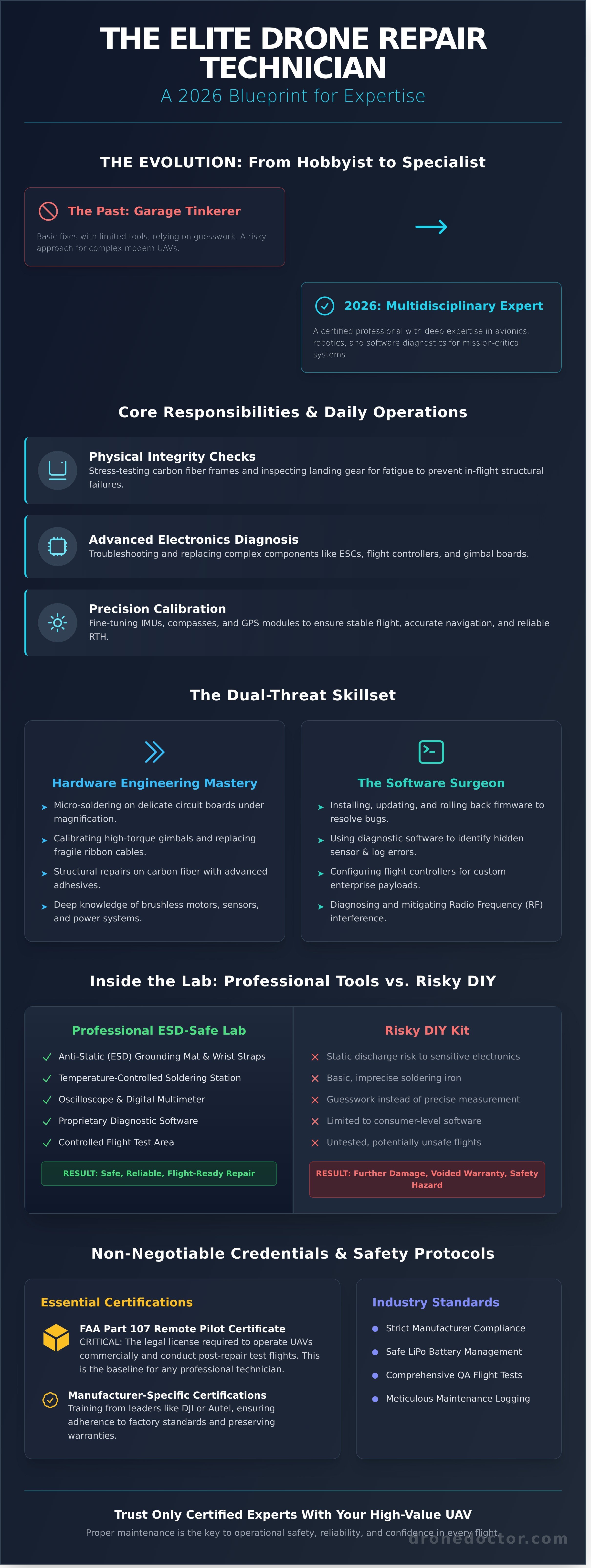
Olvídate de la vieja imagen de un aficionado trasteando en un garaje. Para 2026, un técnico de reparación de drones es un especialista altamente cualificado y multidisciplinar, esencial para los sectores comercial y de seguridad pública. Este papel ha evolucionado mucho más allá de las reparaciones básicas, exigiendo experiencia en aviónica, robótica, diagnóstico de software y tecnología de sensores avanzados. En esencia, un técnico es el profesional responsable del mantenimiento, la resolución de problemas y la reparación de un Vehículo Aéreo No Tripulado (UAV) moderno, asegurando que cada aeronave sofisticada opere con el máximo rendimiento y seguridad.
El crecimiento explosivo en las aplicaciones de drones empresariales significa que lo que está en juego es más alto que nunca. Industrias desde la agricultura y la construcción hasta los servicios de emergencia ahora dependen de drones equipados con cargas útiles complejas como LiDAR y sensores de imágenes térmicas. Cuando estos sistemas de misión crítica fallan, no es solo un inconveniente, es un golpe operativo y financiero significativo. Aquí es donde un técnico certificado en reparación de drones se vuelve indispensable, sirviendo como el experto de primera línea que mantiene estas flotas avanzadas en el aire y asegura que cada vuelo cumpla con las estrictas regulaciones de seguridad de la FAA.
Responsabilidades clave y operaciones diarias
El día de un técnico es una clase magistral de precisión y resolución de problemas. Son los expertos a quienes recurrir para diagnosticar y resolver problemas complejos que mantienen a un dron en tierra. Las operaciones diarias son prácticas y exigen una atención meticulosa a los detalles.
- Verificaciones de integridad física: Realización de pruebas de estrés e inspecciones detalladas de los marcos de fibra de carbono y el tren de aterrizaje para identificar grietas o fatiga estructural antes de que puedan provocar fallas en vuelo.
- Diagnóstico avanzado de electrónica: Solución de problemas y reemplazo de componentes complejos como los Controladores Electrónicos de Velocidad (ESC), controladores de vuelo y placas de control de cardán para resolver fallas de energía e inestabilidad de vuelo.
- Calibración de precisión: Calibración de Unidades de Medición Inercial (IMU), brújulas y módulos GPS para garantizar un vuelo estacionario estable, una navegación precisa y funciones confiables de regreso a casa.
Estándares de la industria y protocolos de seguridad
En el mundo profesional, "suficientemente bueno" no es aceptable. Cada reparación debe cumplir con rigurosos estándares de la industria para garantizar la seguridad de la aeronave, su carga útil y las personas en tierra. La confiabilidad no es solo un objetivo; es un requisito.
- Cumplimiento del fabricante: Seguir estrictamente los manuales de reparación y boletines de servicio específicos del fabricante de líderes de la industria como DJI, Autel Robotics y Skydio para mantener las garantías y los estándares de rendimiento.
- Gestión de baterías y sistemas de energía: Realizar evaluaciones de la salud de las baterías, gestionar ciclos de carga seguros y manipular baterías LiPo potencialmente peligrosas de acuerdo con los protocolos de seguridad establecidos.
- Control de calidad y registro: Ejecutar pruebas de vuelo completas después de la reparación en un entorno controlado y registrar meticulosamente todas las acciones de mantenimiento para el cumplimiento y los registros de preparación para el vuelo.
El conjunto de habilidades especializadas de un técnico profesional
Convertirse en un técnico de reparación de drones exitoso requiere más que un destornillador y una corazonada. Exige una poderosa combinación de ingeniería de precisión, fluidez digital y comunicación clara. Los mejores técnicos son solucionadores de problemas que pueden diagnosticar problemas invisibles a simple vista y luego traducir fallas técnicas complejas en soluciones simples y fáciles de usar para el cliente. Esta profunda experiencia a menudo va de la mano con una comprensión integral de la dinámica y las regulaciones de vuelo, razón por la cual muchos de los mejores técnicos también obtienen su Certificado de Piloto Remoto de la FAA para realizar vuelos de prueba exhaustivos y legales.
En esencia, el trabajo consiste en dominar la intrincada danza entre hardware y software. Debes poder leer diagramas de cableado complejos como un segundo idioma y comprender los sutiles signos de interferencia de RF (Radio Frecuencia) que pueden dejar un vuelo en tierra. Las siguientes habilidades son imprescindibles para cualquiera que se tome en serio esta carrera.
Dominio de la ingeniería de hardware
Aquí es donde la precisión física es primordial. Un técnico profesional trabaja con confianza bajo aumento, realizando microsoldaduras en delicadas placas de circuito. Las tareas diarias pueden implicar desde recalibrar gimbals de alto par y reemplazar cables planos frágiles hasta realizar reparaciones estructurales en marcos de fibra de carbono con adhesivos avanzados. Se trata de una comprensión profunda y práctica de los motores sin escobillas, los sensores ópticos y la integridad física de la aeronave.
El cirujano de software: firmware y lógica
Más allá de los componentes, un técnico de reparación de drones de primer nivel es un experto en software. Esto significa instalar, actualizar e incluso revertir firmware de manera experta para resolver errores persistentes. Utilizan software de diagnóstico patentado para identificar errores de sensor ocultos que el usuario promedio nunca vería. Para drones empresariales o comerciales avanzados, esta habilidad se extiende a la configuración de controladores de vuelo para cargas útiles personalizadas, asegurando que el cerebro del dron esté perfectamente optimizado para sus tareas de misión crítica.
Dentro del laboratorio: herramientas profesionales vs. kits de bricolaje
¡Olvídate de esa caja de herramientas polvorienta en tu garaje! Si bien un juego de destornilladores y alicates es un comienzo, no es suficiente para abordar la compleja electrónica que se encuentra en los drones avanzados de hoy en día. Un técnico profesional de reparación de drones opera en un entorno especializado, utilizando herramientas que diagnostican y reparan problemas a nivel microscópico. Intentar una reparación a nivel de placa con un soldador barato de una tienda de hobby es una forma segura de convertir una simple reparación en un fallo catastrófico. El equipo adecuado no es un lujo, es esencial para reparaciones seguras y fiables.
La base de cualquier laboratorio profesional es un entorno seguro contra descargas electrostáticas (ESD). Una sola descarga invisible de electricidad estática de tu cuerpo puede destruir instantáneamente el controlador de vuelo o el sensor de la cámara de un dron. Los técnicos usan alfombrillas y muñequeras con conexión a tierra para neutralizar esta amenaza. Más allá de la seguridad, la precisión es clave. Se utilizan plantillas especializadas y calibradores digitales para verificar la geometría de vuelo perfecta, asegurando que el marco y los motores de un dron estén alineados con una fracción de milímetro. Para fallas electrónicas difíciles, una cámara térmica es un cambio radical, revelando instantáneamente cortocircuitos a nivel de placa como puntos calientes brillantes y ahorrando horas de conjeturas.
Equipo de diagnóstico esencial
Diagnosticar un problema es la mitad de la batalla. Los profesionales confían en equipos avanzados para identificar la causa exacta de un fallo antes de siquiera coger un soldador. Estos son los imprescindibles:
- Osciloscopios digitales: Permiten al técnico "ver" las señales eléctricas que pulsan entre el controlador de vuelo y los ESC, lo que permite detectar la corrupción de datos o la pérdida de señal.
- Fuentes de alimentación programables: Alimentan de forma segura componentes individuales o placas de circuito completas a voltajes precisos, lo que permite realizar pruebas sin riesgo de daños adicionales.
- Multímetros de alta calidad: Un multímetro de confianza es crucial para realizar comprobaciones fundamentales como pruebas de continuidad, análisis de caída de voltaje y mediciones de resistencia.
Instrumentos de reparación de precisión
Una vez diagnosticado el problema, un técnico cualificado en reparación de drones necesita precisión quirúrgica para realizar la reparación. Aquí es donde entran en juego los instrumentos de reparación de alta gama, que permiten trabajar en componentes más pequeños que un grano de arroz.
- Estaciones de microsoldadura: A diferencia de los soldadores básicos, estas estaciones ofrecen perfiles de temperatura ajustables para trabajar de forma segura en microcomponentes delicados y sensibles al calor sin derretir las piezas adyacentes.
- Limpiadores ultrasónicos: La herramienta definitiva para salvar drones dañados por el agua. Estos dispositivos utilizan ondas sonoras de alta frecuencia para eliminar la corrosión de las placas de circuito, a menudo restaurándolas a su plena función.
- Microscopios digitales de alta resolución: Es imposible reparar lo que no se puede ver. Un microscopio potente es innegociable para inspeccionar y soldar pequeños componentes de tamaño 0201 en una PCB abarrotada.
Cómo convertirse en técnico: trayectoria profesional y certificaciones
¿Listo para convertir tu pasión por los drones en una carrera de alta demanda? El camino para convertirse en un técnico profesional de reparación de drones es más accesible que nunca, pero requiere la capacitación y las credenciales adecuadas para destacarse. La industria está madurando rápidamente, pasando de las reparaciones de aficionados a un modelo de servicio profesional. Esto es lo que necesitas saber para construir una carrera exitosa y lo que distingue a los profesionales.
Antes incluso de coger un soldador, tu primer paso es conseguir una licencia FAA Parte 107. Aunque es un certificado de piloto remoto, es absolutamente esencial para los técnicos. ¿Por qué? Toda reparación profesional termina con un vuelo de prueba para garantizar el rendimiento y la seguridad. Volar un dron con fines comerciales –y un vuelo de prueba post-reparación cuenta– sin una Parte 107 es ilegal y una gran señal de alarma. Esta licencia es tu base de credibilidad.
Más allá de la FAA, las certificaciones específicas del fabricante son tu boleto a las grandes ligas. Programas como el de Capacitación en Mantenimiento Empresarial de DJI le indican a los clientes que tienes la experiencia aprobada por la marca para manejar equipos complejos y de alto valor. Esta capacitación a menudo se requiere para el trabajo de garantía autorizado y te brinda una ventaja competitiva masiva. A medida que se proyecta que el mercado de drones se dispare hasta 2026, los técnicos con estas habilidades especializadas verán la mayor demanda y salarios.
Opciones de educación y formación
Tu camino hacia el estatus de experto puede tomar varios caminos, cada uno ofreciendo ventajas únicas:
- Programas universitarios comunitarios: Los cursos de electrónica o mantenimiento de aviación proporcionan una base teórica sólida para diagnósticos complejos.
- Cursos de reparación de drones en línea: Estos ofrecen un aprendizaje especializado y flexible. ¡Actúa AHORA, pero siempre verifica su credibilidad y busca componentes prácticos.
- Prácticas: El modelo definitivo de "aprender haciendo". En centros de servicio como Drone Doctor, trabajarás con drones reales bajo la guía de expertos, desarrollando habilidades prácticas rápidamente.
Qué deben buscar los clientes
Como profesional, tus credenciales generan confianza. Los clientes siempre deben verificar las certificaciones de un taller (como la Parte 107) y la experiencia del técnico. Un centro de servicio de buena reputación siempre ofrecerá una garantía en su trabajo y tendrá un seguro de responsabilidad civil para proteger el valioso equipo del cliente. Estas son las diferencias clave que separan a los talleres establecidos y profesionales de los reparadores "cowboy" no calificados. Tu profesionalismo es tu mejor herramienta de marketing.
Asegurarse de que su dron esté en manos de un profesional certificado, asegurado y experimentado es innegociable. Para un servicio en el que pueda confiar de parte de un equipo líder de técnicos de reparación de drones, obtenga más información sobre nuestro proceso de reparación experto en dronedoctor.com.
La diferencia de Drone Doctor: experiencia en la que puedes confiar
Comprender las habilidades de un técnico de reparación de drones es una cosa; experimentar un servicio de primera clase es otra. En Drone Doctor LLC, no solo reparamos drones, restauramos tu confianza para volar. Toda nuestra operación se basa en una experiencia inigualable, procesos transparentes y una auténtica pasión por la tecnología de drones.
Este compromiso es liderado por nuestros técnicos principales, Liz y Jose, cuyas décadas de experiencia combinadas establecen el estándar de la industria en calidad y precisión. Lo han visto todo, desde simples calibraciones de gimbal hasta complejas reparaciones de placas base, y entrenan personalmente a nuestro equipo para asegurar que cada dron salga de nuestro taller en óptimas condiciones.
Somos su verdadera "ventanilla única". No solo le vendemos la última tecnología; construimos una asociación para apoyarle durante todo el ciclo de vida de su dron. Nuestro proceso de reparación está diseñado para una transparencia total:
- Paso 1: Diagnóstico y presupuesto gratuitos: Evaluamos tu dron y te proporcionamos un presupuesto claro y sin compromiso. Nunca hay sorpresas.
- Paso 2: Reparación experta: Nuestro equipo utiliza únicamente piezas OEM originales para garantizar el rendimiento, la seguridad y la compatibilidad. Creemos en hacerlo bien a la primera.
- Paso 3: Pruebas de vuelo rigurosas: Antes de devolver tu dron, realizamos pruebas de vuelo exhaustivas para asegurar que todos los sistemas funcionen a la perfección.
Elevando las capacidades para clientes empresariales
Para nuestros socios comerciales, el tiempo de inactividad no es una opción. Ofrecemos soporte especializado para flotas empresariales, incluyendo drones de la serie DJI Matrice y cargas útiles avanzadas de imágenes térmicas. Nuestros rápidos tiempos de respuesta y programas de mantenimiento personalizados están diseñados para mantener sus activos de alta utilización en el aire, asegurando que sus operaciones funcionen sin interrupciones. Confíe en nosotros para ser su socio confiable en la gestión profesional de drones.
¡Actúe AHORA: Vuelva a poner su dron en el aire!
¿Listo para volar de nuevo? No dejes que un dron averiado te mantenga en tierra. Iniciar tu ticket de reparación es rápido y fácil: simplemente llena nuestro formulario en línea para comenzar el proceso. Estamos comprometidos con tu satisfacción al 100% y respaldamos cada reparación que realizamos. Deja que nuestro equipo experto te muestre hoy la diferencia de Drone Doctor LLC. ¡Contacta con Drone Doctor LLC para un presupuesto de reparación experto!
No te quedes en tierra, ¡confía en la diferencia de Drone Doctor!
En última instancia, la línea entre un aficionado y un profesional es clara. Un técnico certificado en reparación de drones aporta una poderosa combinación de habilidades especializadas, herramientas de nivel profesional y un conocimiento profundo que un kit de bricolaje simplemente no puede igualar. Esta experiencia no se trata solo de solucionar un problema, sino de restaurar el rendimiento óptimo de su dron y garantizar su seguridad en el cielo.
¿Por qué arriesgar tu inversión de alta tecnología? En Drone Doctor, vivimos y respiramos drones. Como el líder en ventas, reparación y servicio y un distribuidor autorizado de DJI y Enterprise, nuestro equipo tiene la experiencia certificada que tu equipo merece. Estamos aquí para ofrecerte un servicio de primera clase, ¡y Se habla Español!
Deja de esperar y empieza a volar. ¡Tu satisfacción es nuestra principal prioridad! ¡Envía tu dron a nuestros técnicos expertos hoy mismo! Actúa AHORA y vuelve a capturar vistas increíbles con la confianza de una reparación profesional.
Preguntas Frecuentes
¿Qué hace un técnico de reparación de drones diariamente?
El día a día de un técnico de reparación de drones es una mezcla dinámica de diagnósticos y precisión práctica. Las tareas incluyen la resolución de errores de vuelo con software, la sustitución física de componentes dañados como brazos y motores, y la delicada soldadura en placas de circuitos. Los técnicos también calibran gimbals y sensores para garantizar un rendimiento óptimo. Una parte clave del trabajo implica comunicarse claramente con los clientes, explicar las reparaciones necesarias y proporcionar estimaciones de servicio precisas para que vuelvan a volar rápidamente.
¿Necesito un título para convertirme en técnico de drones?
No, ¡no se requiere un título formal de cuatro años para convertirse en un técnico de drones exitoso! Si bien un título técnico en electrónica o robótica es beneficioso, la mayoría de los empleadores priorizan la experiencia práctica y las certificaciones. Concéntrese en adquirir habilidades prácticas a través de cursos de capacitación especializados, obteniendo certificaciones de fabricantes (como de DJI) y dominando competencias básicas como la soldadura y el diagnóstico. La habilidad demostrable es mucho más valiosa que un diploma en este campo práctico y de ritmo rápido. ¡Actúe ahora y comience a desarrollar sus habilidades!
¿Cuánto ganan los técnicos de reparación de drones en 2026?
A medida que la industria de los drones explota, se proyecta que el salario de un técnico calificado en reparación de drones aumente significativamente para 2026. Estimamos que los puestos de nivel de entrada comenzarán en el rango de los $55,000, mientras que los técnicos experimentados con especializaciones en drones de nivel empresarial o agrícolas podrían alcanzar salarios de $85,000 o más. Su experiencia, ubicación y los tipos de drones que atienda serán los factores más importantes para maximizar su potencial de ingresos en esta carrera de alta demanda.
¿Puede un técnico de drones reparar cualquier marca de dron?
Si bien las habilidades electrónicas fundamentales son transferibles, la mayoría de los técnicos se especializan en una o dos marcas principales como DJI, Autel o Skydio. Esto les permite desarrollar una profunda experiencia y mantener un inventario listo de piezas para los modelos más comunes. Un técnico versátil ciertamente puede abordar reparaciones en marcas menos comunes, pero el servicio de una amplia variedad requiere un amplio conocimiento y la capacidad de obtener una gama diversa de componentes, lo que puede ser un desafío para modelos más oscuros.
¿Es mejor usar un técnico local o un centro de servicio oficial?
La mejor opción depende de su situación. Un técnico local suele ser más rápido, más asequible para trabajos fuera de garantía y brinda un toque personal. Son perfectos para reparaciones físicas comunes. Sin embargo, para problemas cubiertos por la garantía del fabricante o para problemas de software patentado altamente complejos, un centro de servicio oficial es el camino a seguir. Cuentan con herramientas especializadas y acceso directo a las últimas actualizaciones, lo que garantiza que la reparación cumpla con los estándares de fábrica.
¿Cuál es la reparación más común que realiza un técnico?
Las reparaciones más comunes son casi siempre el resultado de un choque. Los técnicos dedican la mayor parte de su tiempo a reemplazar brazos rotos, carcasas superiores o inferiores agrietadas y trenes de aterrizaje dañados. Otra reparación frecuente y delicada es la reparación o reemplazo del conjunto del cardán de la cámara, que es muy susceptible a daños durante un aterrizaje forzoso. Los reemplazos de motores debido a escombros o quemaduras también son una parte rutinaria del trabajo, manteniendo los drones volando de manera segura y sin problemas.
¿Cuánto tiempo tarda un técnico en reparar un dron estrellado?
El tiempo de reparación varía según la gravedad del accidente y la disponibilidad de piezas. Una solución simple, como reemplazar un juego de hélices o un solo puntal del tren de aterrizaje, puede tomar menos de una hora. Una reparación más compleja, como reemplazar un brazo y un motor de un dron, podría tomar de 2 a 4 horas. Para daños extensos que requieren un desmontaje completo o si se deben pedir piezas específicas, la reparación podría llevar varios días. Un técnico profesional siempre proporcionará una estimación de tiempo después de un diagnóstico exhaustivo.