
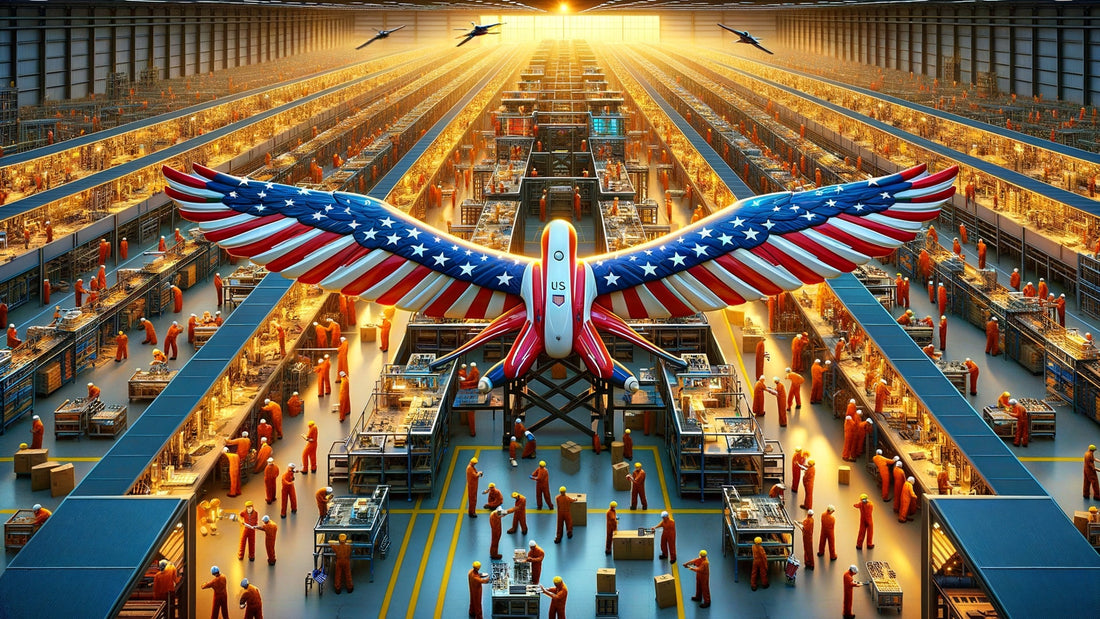
🇪🇸 El impulso a los drones fabricados en EE. UU.: recuperando los cielos a través de la innovación nacional
Compartir
A medida que el mercado global de drones continúa en auge —proyectado a superar los $90 mil millones para fines de la década—, Estados Unidos está realizando un giro urgente y estratégico hacia la fabricación nacional de drones. Este cambio no se trata solo de competitividad económica, sino de seguridad nacional, independencia tecnológica y la creación de una cadena de suministro resiliente que no dependa de naciones adversarias.
Durante años, los fabricantes chinos, liderados por DJI, han dominado los sectores de drones de consumo y empresariales, ofreciendo plataformas sofisticadas a precios imbatibles gracias a los subsidios gubernamentales y las cadenas de suministro integradas verticalmente. Pero con las crecientes tensiones geopolíticas y las crecientes preocupaciones de ciberseguridad, los legisladores, funcionarios de defensa y líderes de la industria de EE. UU. están haciendo sonar la alarma y tomando medidas.
A mediados de 2025, el Departamento de Defensa de EE. UU., bajo la directiva del Secretario de Defensa Pete Hegseth, se movió para desmantelar los obstáculos burocráticos que ralentizaban la adopción de drones de fabricación nacional. La expansión de la lista "Blue UAS" del Pentágono ahora permite un uso más amplio en el campo de batalla y una adquisición simplificada de sistemas de fabricación estadounidense. Este cambio de política fue seguido por un aumento en el apoyo a los fabricantes de drones con sede en EE. UU., con las acciones de empresas como AeroVironment y Kratos repuntando con la noticia.
El gobierno federal también ha señalado su compromiso de reubicación de la producción de drones a través de órdenes ejecutivas que limitan el uso de drones chinos en operaciones gubernamentales, alientan a las agencias federales a comprar sistemas estadounidenses y aceleran la reforma regulatoria de la FAA para operaciones más allá de la línea de visión (BVLOS). Estos esfuerzos se están reforzando a nivel estatal: Ohio aprobó recientemente un paquete de incentivos de $310 millones para construir una instalación de fabricación de drones de 5 millones de pies cuadrados liderada por el contratista de defensa Anduril Industries, creando más de 4,000 empleos de alta tecnología en el proceso.
En el frente de la innovación, está surgiendo una nueva generación de startups de drones en EE. UU., impulsadas por contratos de defensa, capital privado y un sentido de urgencia patriótica. Empresas como Performance Drone Works (PDW) —que evolucionó del mundo de las carreras de drones— están produciendo cuadricópteros avanzados para uso militar con tiempos de vuelo extendidos, cargas útiles modulares y componentes totalmente fabricados en Estados Unidos. Mientras tanto, Skydio, pionero en drones autónomos impulsados por IA, continúa expandiendo sus ofertas empresariales y de seguridad pública después de salir del mercado de consumo para centrarse en aplicaciones escalables y seguras.
A pesar del progreso, persisten los desafíos. Los fabricantes estadounidenses enfrentan costos más altos, cadenas de suministro limitadas para componentes clave como imanes de tierras raras y sensores, y la necesidad de estandarización en todas las plataformas de drones. Sin embargo, con un creciente apoyo bipartidista en el Congreso —evidenciado por la propuesta "Drones for America Act"—, existe una hoja de ruta para abordar estos obstáculos a través de aranceles a las importaciones chinas, inversión en la fabricación de componentes nacionales y contratos federales de adquisición garantizados.
Lo que está claro es esto: EE. UU. ya no se contenta con ponerse al día. La convergencia de la política pública, la innovación privada y la necesidad geopolítica está sentando las bases para una nueva era de liderazgo estadounidense en drones. Desde el reconocimiento en el campo de batalla hasta el mapeo comercial, la seguridad pública, la agricultura y la cinematografía, el futuro del vuelo está siendo remodelado, no solo por la tecnología, sino por la convicción de traerlo a casa.